

Bible · The State of the Dead · ~36 min read
Does hell burn forever?
More people have walked away from God over this one doctrine than almost any other — a God Who keeps most of humanity alive in fire forever. The strange thing is that the Bible never taught it. Here is the whole question, from what a soul actually is to what “forever” actually means, answered text by text.
By George Hinestrosa · Personal study & research

A few years ago the world watched, in horror, footage of a captured pilot locked in a cage and burned alive. Nearly everyone who saw it called it one of the most monstrous things a human being could do to another. And yet millions of sincere Christians have been taught that God will do exactly that — not for a few agonizing minutes, but for all eternity, without rescue and without end, to the greater part of every generation that has ever lived, including people whose only crime was to die at fourteen without having sorted out their theology.
Thinking people look at that picture of God and quietly conclude there is no justice in it, and many of them leave. Who could blame them? If that were really the God of the Bible, He would be, by any honest measure, more cruel than the worst tyrant in history. But it is not the God of the Bible. There is real punishment for sin in Scripture — the Bible is not squeamish about that — but it is not eternal conscious torment, and the doctrine that it is did not come from the prophets or the apostles. It came from somewhere else entirely. Let us take the whole question slowly, and let the Book speak for itself.
The view most people hold
Strip it to its bones, the common doctrine runs like this: every person carries inside them an immortal soul that cannot die; at death that soul separates from the body and goes immediately to its reward — the good to bliss, the wicked to a fire that torments them consciously, forever. The body may rot; the soul burns on. It feels ancient and obvious. But notice where it actually begins. It begins in the garden, in the third chapter of the Bible, in the very first sentence the serpent ever spoke against the word of God. The Lord had said, “in the day that thou eatest thereof thou shalt surely die” (Genesis 2:17). The serpent answered:
“And the serpent said unto the woman, Ye shall not surely die.”
— Genesis 3:4, KJV
That is the doctrine of the immortal soul in its purest form: you will not really die; something in you lives on no matter what. God said death; the serpent said you will not die. One of them was lying. The idea that the soul cannot die is not the testimony of Scripture — it is the contradiction of the first thing God ever warned us about. It entered human religion through ancient Egypt, was refined in the Greek philosophy of Plato, and was taught fervently in the schools of Alexandria, where the more worldly Jews went to be educated. (It is why the Sadducees came home from Alexandria teaching that the dead went straight to bliss or to torment.) From paganism it seeped into the church, and most of Christianity has carried it ever since — never noticing that its taproot runs all the way back to a serpent in a tree.
What a soul actually is
Everything turns on a single verse, the formula of human life, and it does not say what most people assume it says:
“And the LORD God formed man of the dust of the ground, and breathed into his nostrils the breath of life; and man became a living soul.”
— Genesis 2:7, KJV
Read it carefully. Man did not receive a soul; man became a soul. The equation is simple: dust of the ground (the body, lifeless on its own) plus the breath of life (the life-spark God breathes in) equals a living soul — a living being. The Hebrew word translated “soul” is nephesh, and it means the whole living creature: the person, the self, you. It is not a separate ghost riding around inside the body, waiting to be released. It is the living person himself. In fact the same word is used of the animals, who are also called living “souls” (nephesh) in the Hebrew of Genesis 1. You do not have a soul; you are a soul.
So what is that “breath of life”? Scripture calls it the ruach — spirit, breath, wind, the life-principle. It is not a thinking entity; it is the spark of life God lends and reclaims. Watch what happens, then, when life ends. The formula simply runs in reverse:
“Then shall the dust return to the earth as it was: and the spirit shall return unto God who gave it.”
— Ecclesiastes 12:7, KJV
The dust goes back to dust; the breath of life goes back to the God Who gave it. What returns to God is not a conscious soul winging its way home — it is the life-principle, the breath, the same thing He breathed in at the beginning. Take the breath away and the living soul does not float off; it simply ceases to be a living soul, the way switching off the current does not send the “light” somewhere else. And lest anyone still insist the soul cannot die, God says plainly that it can:
“Behold, all souls are mine… the soul that sinneth, it shall die.”
— Ezekiel 18:4, KJV
The soul is not naturally immortal. Only One is. “The King eternal, immortal, invisible, the only wise God” (1 Timothy 1:17); the One “who only hath immortality” (1 Timothy 6:16). Immortality belongs to God alone, and to us only as a future gift (we will come to that). It is worth knowing that the King James Bible uses the word “soul” some sixteen hundred times, and not once does it ever join it to the word “immortal.” The phrase “immortal soul” is not in the Bible. People assume it is on nearly every page; it is on none of them.
Death is a sleep — the whole testimony
If the dead are not awake in bliss or torment, what are they? The Bible has one settled, gentle, endlessly repeated answer: they are asleep. Not the soul-is-elsewhere “sleep” of the poets — a real, dreamless, unconscious rest in the grave until the resurrection. The picture is consistent from Genesis to Revelation, and it is worth laying the texts out in full, because the weight of them settles the question.
Start with what the dead know and do, which is nothing:
“For the living know that they shall die: but the dead know not any thing… Also their love, and their hatred, and their envy, is now perished.”
— Ecclesiastes 9:5-6, KJV
“His breath goeth forth, he returneth to his earth; in that very day his thoughts perish.”
— Psalm 146:4, KJV
The dead know nothing; their very thoughts perish the day they die. That alone is fatal to the idea of conscious souls in heaven or in fire. And the witnesses pile up. The dead do not praise God (“The dead praise not the LORD, neither any that go down into silence,” Psalm 115:17). They do not remember Him (“in death there is no remembrance of thee: in the grave who shall give thee thanks?” Psalm 6:5). They cannot hope or work or plan (“there is no work, nor device, nor knowledge, nor wisdom, in the grave, whither thou goest,” Ecclesiastes 9:10; “they that go down into the pit cannot hope for thy truth,” Isaiah 38:18). They are even unaware of what becomes of their own children: “His sons come to honour, and he knoweth it not” (Job 14:21).
Then there is the sleep language itself, chosen deliberately, again and again:
“So man lieth down, and riseth not: till the heavens be no more, they shall not awake, nor be raised out of their sleep.”
— Job 14:12, KJV
Daniel is told the dead “sleep in the dust of the earth” and awake at the end (Daniel 12:2), and that he himself will “rest, and stand in thy lot at the end of the days” (Daniel 12:13). David, the man after God’s own heart, “is both dead and buried… David is not ascended into the heavens” (Acts 2:29, 34) — if anyone earned an immediate trip to glory it was David, and Peter says plainly he is still in his grave. Over and over the saints “fall asleep”: Stephen (Acts 7:60), the believers Paul comforts (1 Thessalonians 4:13-15), the long roll of the faithful (1 Corinthians 15:6, 18, 20). The kings of Israel, good and bad, each “slept with his fathers.” Death, in the Bible’s own vocabulary, is sleep.
And no one Jesus loved makes the point better than Lazarus. When Lazarus died, Jesus said, “Our friend Lazarus sleepeth; but I go, that I may awake him out of sleep.” The disciples took Him literally, so He told them plainly: “Lazarus is dead” (John 11:11-14). To the world Lazarus was dead; to Christ, the God of the living, he was merely asleep. Now here is the detail that should end the debate by itself. Lazarus had been dead four days. If the popular doctrine were true, he had just spent four days in heaven (or somewhere). Yet when Jesus called him out of the tomb, Lazarus does not say a single word about where he had been — no glimpse of paradise, no report from the other side, nothing. He had been nowhere. He had been asleep (John 11:39-44). And it would have been a cruelty beyond words to summon a man back from four days in bliss to this world of sorrow. There was no bliss to summon him from.
Where, then, is the believer’s reward given? Never at death — always at the resurrection, at the coming of Christ:
“For the Lord himself shall descend from heaven with a shout… and the dead in Christ shall rise first: Then we which are alive and remain shall be caught up together with them… to meet the Lord in the air.”
— 1 Thessalonians 4:16-17, KJV
If the dead in Christ were already in heaven, why would they need to be raised at all? Paul’s whole comfort to grieving believers (“sorrow not, even as others which have no hope,” 1 Thessalonians 4:13) is not “your loved one is already with the Lord” — it is “your loved one is asleep, and Christ will raise them.” The same hope runs through it all: the dead are changed and given immortality “at the last trump” (1 Corinthians 15:51-54); each is made alive “in his own order… at his coming” (1 Corinthians 15:22-23); the reward is brought with Christ when He returns (Revelation 22:12; 2 Timothy 4:8); “all that are in the graves… shall come forth” at His voice (John 5:28-29); Job will see God in his own resurrected flesh “in the latter day” (Job 19:25-27). The dead sleep; the living wait; and at the trumpet they rise together. That is the architecture of the whole Bible, and there is no conscious afterlife tucked anywhere inside it.
The texts people raise — and what they actually say
A doctrine this widespread has its proof-texts, and they deserve honest answers, not dismissal. Here are the ones always brought forward, each read in its own light.
“Fear him which is able to destroy both soul and body in hell” (Matthew 10:28). This is offered as proof the soul survives — but read what it actually says God will do to it: destroy it. Not preserve it alive in fire; destroy it. The verse contrasts men, who can only kill the body, with God, Who can end the whole person, body and life together. Far from teaching an immortal soul, it teaches the opposite — that the soul can be destroyed, and in hell will be. (The word “soul” here, again, means the life, the self.)
The rich man and Lazarus (Luke 16:19-31). This is a parable, and Jesus aimed it straight at the Pharisees and Sadducees — the very people who had brought home from Alexandria the doctrine that the dead go at once to bliss or torment, and that the righteous recline in “Abraham’s bosom.” Jesus takes their own picture and turns it upside down on them: the rich man (who stands for self-satisfied Israel, with every advantage) is lost, and the beggar (the despised outsider, with nothing) is saved. Read it as literal geography and it collapses into nonsense: all the redeemed cannot fit in one man’s literal bosom; the damned and the saved do not chat across the abyss; bodies in the grave have no literal eyes or tongues or flames before the resurrection; and the rich man praying to “Father Abraham” to send him relief is precisely the praying-to-the-dead that Scripture forbids. A parable cannot be made to teach a doctrine that the plain texts — “the dead know not any thing” — flatly deny. Its lesson is in its last line: if they will not hear Moses and the prophets, they will not be persuaded though one rose from the dead (v. 31). And one soon would: another Lazarus, raised, and still they would not believe.
The thief on the cross (Luke 23:43). “Verily I say unto thee, To day shalt thou be with me in paradise” — surely that means the thief was in heaven that very day? But the original Greek had no punctuation; the comma is a translator’s choice. Read it “Verily I say unto thee today, shalt thou be with me in paradise,” and the difficulty vanishes — today, on this dark day, I give you the promise. And two facts force that reading. First, the thief was not dead that day; he was still alive when the soldiers came to break the legs of those on the crosses (John 19:31-33). Second, and decisive: Jesus Himself did not go to paradise that day. On Sunday morning He told Mary, “Touch me not; for I am not yet ascended to my Father” (John 20:17). If Christ had not yet gone up, the thief could not have been with Him there. “Today” is the day the promise was made, not the day it was kept.
“Their worm dieth not, and the fire is not quenched” (Mark 9:48; Isaiah 66:24). The word Jesus uses for “hell” here is Gehenna — the Valley of Hinnom, the perpetually smoldering garbage dump outside Jerusalem, where refuse and carcasses were thrown to be consumed by maggots and fire. The picture is of total destruction, not eternal torture: the worm (the maggot) does its work on the dead body until nothing is left, and the fire is “not quenched” — that is, not put out — until it has burned everything up. Scripture defines its own phrase. God warned Jerusalem that if they profaned the Sabbath He would “kindle a fire in the gates… and it shall not be quenched” (Jeremiah 17:27); and when it fell, the city was burned with that very “unquenchable” fire (2 Chronicles 36:19-21). Jerusalem is not on fire today. “Unquenchable” never meant a fire that burns forever; it meant a fire no one can put out before it finishes its work.
“Everlasting fire” and “eternal fire” (Matthew 25:41, 46; Jude 7). Jude gives us the inspired commentary in one stroke: Sodom and Gomorrah are “set forth for an example, suffering the vengeance of eternal fire” (Jude 7). Are Sodom and Gomorrah still burning? They are not; they were turned “into ashes” long ago (2 Peter 2:6). The fire was “eternal” in its result — the destruction is permanent and irreversible — not in its duration. So too “everlasting punishment” in Matthew 25:46: the punishment is death, and its result is everlasting; it is an everlasting punishment, not an everlasting punishing. Which brings us to the word the whole doctrine leans on.
What the Bible means by “forever”
Press an honest believer in eternal torment and it always comes down to one word: forever. “Tormented… for ever and ever.” But the Bible does not use “forever” the way we casually do, to mean unending eternity without exception. The Hebrew word is olam and the Greek is aiōn / aiōnios, and their root idea is an age — a long or indefinite duration, “as long as the thing lasts.” How long “forever” is depends entirely on the thing it is attached to. And Scripture proves this with case after case where “forever” plainly cannot mean eternity:
Jonah was in the belly of the fish “for ever” (Jonah 2:6) — which the book itself tells us was three days and three nights. A bondservant who loved his master was to serve him “for ever” (Exodus 21:6; Deuteronomy 15:17) — that is, for the rest of his life. Hannah brought young Samuel to the sanctuary to “abide for ever” (1 Samuel 1:22) — and explained it herself: “as long as he liveth” (v. 28). The Aaronic priesthood was an “everlasting priesthood” (Exodus 40:15; Numbers 25:13) — yet it was set aside and replaced when Christ came (Hebrews 7:11-12). And Sodom’s “eternal fire” (Jude 7) burned out before Abraham’s grandchildren were grown. In every one of these, “forever” means “as long as it lasts” — the lifetime of the servant, the age of the priesthood, the duration of the fire’s fuel.
So when Revelation says the wicked are “tormented day and night for ever and ever” (Revelation 20:10), the phrase in Greek is eis tous aiōnas tōn aiōnōn — literally “to the ages of the ages,” as the more literal translations render it. It means as long as there is anything left to burn — until they are, in the Bible’s own words, “no more.” The same holds for the smoke that “ascendeth up for ever and ever” (Revelation 14:11). Isaiah used identical language of the destruction of Edom: its smoke “shall go up for ever… none shall pass through it for ever and ever” (Isaiah 34:9-10). Edom is not smoking today. The rising smoke is the sign of a completed destruction, not an eternal furnace. The word never carried the freight that the doctrine of endless torment hangs on it.
What really happens to the wicked
Clear away the misreadings and the Bible’s own teaching stands out with almost embarrassing simplicity. The choice God sets before every soul is not between two kinds of unending life — one blissful, one tortured. It is between life and death:
“For the wages of sin is death; but the gift of God is eternal life through Jesus Christ our Lord.”
— Romans 6:23, KJV
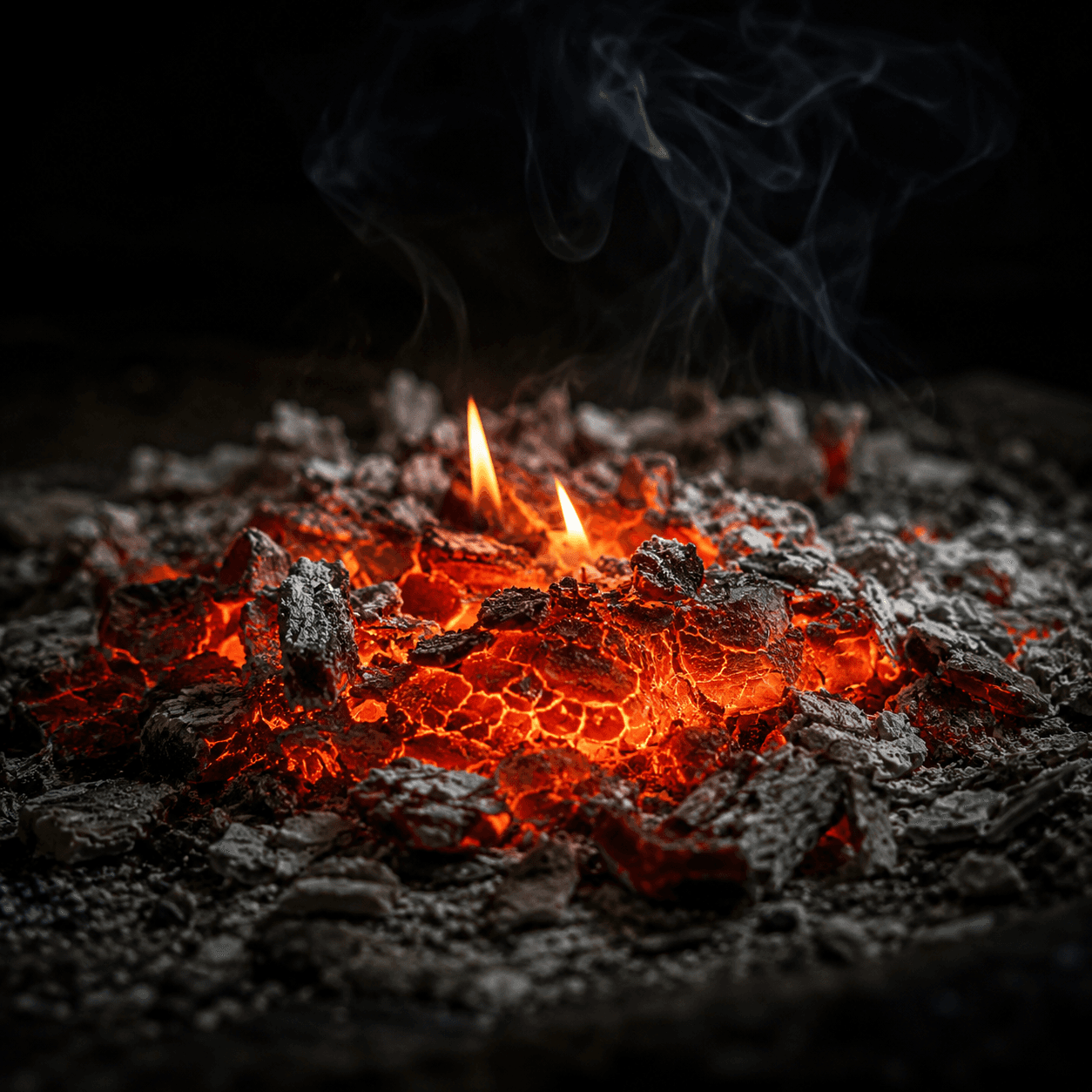
The wage of sin is death, not eternal life in agony. Eternal life is the gift given to the saved alone. There are, the Bible says, two deaths: the first — the sleep we all face — and the second death, which is the lake of fire after the judgment (Revelation 20:14; 21:8). And death means death: the absence of life, not life prolonged in fire forever. The fire is real, and the wicked are really cast into it — but what it does to them is consume them:
“For, behold, the day cometh, that shall burn as an oven; and all the proud… shall be stubble: and the day that cometh shall burn them up… that it shall leave them neither root nor branch. … And ye shall tread down the wicked; for they shall be ashes under the soles of your feet.”
— Malachi 4:1, 3, KJV
Burned up. Neither root nor branch. Ashes underfoot. That is the Bible’s own description, and it is repeated everywhere: “the enemies of the LORD… shall consume; into smoke shall they consume away” (Psalm 37:20); the wicked “shall be as though they had not been” (Obadiah 16). Even Satan, the origin of all of it, does not burn endlessly — God says, “I will bring thee to ashes upon the earth… and never shalt thou be any more” (Ezekiel 28:18-19). The whole sad story of sin and suffering does not get an eternal monument in a corner of the new creation. It ends. It is reduced to ashes and is no more.
This is also why immortality matters. The wicked cannot burn forever for the simplest of reasons: they are never given the immortality that would let them. Immortality is a gift, conferred only on the redeemed, and only at the resurrection — “this mortal must put on immortality” (1 Corinthians 15:53-54), a thing that has not yet happened to anyone. The lost are never made immortal; they remain mortal, and mortals, in fire, die. To teach that the wicked burn forever you must first smuggle in the serpent’s premise — that they cannot die — which is the very thing being disproved.
Two more details quietly finish the case. First, the timing: no one is burning now. Scripture places the fire after the second coming, after the thousand years, after the resurrection and the judgment (Revelation 20) — God rains it down only at the very end. The picture of souls already writhing in hell is not just wrong about the fire; it is centuries early. Second, the degrees: Jesus said one servant would be beaten with “many stripes” and another with “few” (Luke 12:47-48), and that He rewards “every man according to his works” (Revelation 22:12). Eternal torment makes that impossible — everyone would receive the identical infinite sentence, so that a man who killed millions would suffer no more than a child, and the one who killed once would burn exactly as long as Hitler. There is no justice in that, and a just God does not deal so. Varying punishment requires an end to the punishing.
Why the doctrine matters: the character of God
This is not a quarrel over a technicality. The doctrine of eternal torment is the single greatest slander ever told about the character of God, and the older defenders of it said so out loud, with a frankness that is hard to read. One eighteenth-century divine wrote that the smoke of the torment of the damned would ascend forever before the eyes of the redeemed, and that this spectacle “will be in favour of the redeemed… and will give the highest pleasure to those that love God” — that, indeed, were the fires ever extinguished, it “would in a great measure put an end to the happiness… of the blessed.” In plain terms: the saved will sit in heaven and take pleasure in watching their own lost children scream in fire forever. It is a sick idea, and it is not the God of the Bible:
“As I live, saith the Lord GOD, I have no pleasure in the death of the wicked; but that the wicked turn from his way and live.”
— Ezekiel 33:11, KJV
“God is love” (1 John 4:8). He takes no pleasure in the death of the wicked, let alone in their endless torture. And His final promise is a creation with the pain finally gone, not a creation with an eternal torture chamber humming away beneath it: “God shall wipe away all tears from their eyes; and there shall be no more death, neither sorrow, nor crying, neither shall there be any more pain” (Revelation 21:4). You cannot have “no more pain” in the same universe as a fire that tortures most of humanity forever. The two cannot both be true. (The Roman doctrine of purgatory — a halfway fire where the not-quite-wicked burn off their lesser sins — falls with the same stroke: either God pardons sin through Christ or He does not; there is no blowtorch station where we finish the job ourselves. “He will abundantly pardon,” Isaiah 55:7.)
The lie’s living root: talking to the dead
The immortal-soul doctrine is not a harmless mistake; it is the soil in which something darker grows. If the dead are conscious somewhere, then it seems natural to reach for them — through séances, mediums, ancestor veneration, prayers to departed saints, “visits” from those who have passed. And Scripture forbids every bit of it, in the strongest terms, as an abomination: “There shall not be found among you… a consulter with familiar spirits, or a wizard, or a necromancer… for all that do these things are an abomination unto the LORD” (Deuteronomy 18:10-12); “Regard not them that have familiar spirits, neither seek after wizards” (Leviticus 19:31).
Why so severe? Because the dead are asleep and know nothing — so whatever answers a séance is not your departed loved one. “The dead know not any thing”; “his sons come to honour, and he knoweth it not.” If the one you are speaking to is really dead, then the thing impersonating them is a deceiving spirit. This is why modern spiritualism — which announced itself with the very creed “there is no death, there are no dead” — is simply the serpent’s old lie wearing a new coat. The same voice that told Eve “ye shall not surely die” now tells the world the dead are alive and can be reached. Isaiah cut through it once for all: “Should not a people seek unto their God? for the living to the dead? To the law and to the testimony: if they speak not according to this word, it is because there is no light in them” (Isaiah 8:19-20). The plain truth about death is, among other things, a wall of protection — it pulls the entire occult traffic in the dead up by the root.
The comfort the truth gives back
Here is what is so striking once the fog lifts: the Bible’s doctrine of death is not grim — it is a profound relief. To lose someone is hard enough without believing they may be conscious and suffering, or anxiously watching your every stumble from the other side. Scripture says no: they are at rest. They sleep, without pain or fear or the passage of time, and the next thing they will know is the face of Christ. That is why Paul gives the doctrine to grieving people as comfort, not dread:
“I would not have you to be ignorant, brethren, concerning them which are asleep, that ye sorrow not, even as others which have no hope… Wherefore comfort one another with these words.”
— 1 Thessalonians 4:13, 18, KJV
And the waiting is not forever. There is a morning to this sleep. The trumpet sounds, the graves open, the dead in Christ rise immortal, and the long night of death is simply over — “Marvel not at this: for the hour is coming, in the which all that are in the graves shall hear his voice, and shall come forth” (John 5:28-29); “Death is swallowed up in victory” (1 Corinthians 15:54). Not a torture chamber that never closes, but a grave that finally empties; not a God Who keeps His enemies screaming for eternity, but a God Who wipes away the last tear and makes all things new.
A word to those who were taught otherwise
If you have always believed in an ever-burning hell, none of this is aimed at you as an accusation. You were taught it as settled fact, by people who loved you and loved the Lord, and you have likely never once been shown the texts laid side by side. Whole denominations of sincere, praying Christians hold it in good conscience. The quarrel here is not with them; it is with a doctrine that came out of pagan philosophy, that rests on the serpent’s first lie, and that has painted the God of love as a torturer and driven untold numbers away from Him in the process. Letting it go costs you nothing true and gives you back a God you can adore without flinching. Take these verses to the Book, weigh the plain ones against the difficult ones as Scripture says to do, and let the testimony of God outweigh the tradition of men.
Choose life
So, does hell burn forever? No — the fire is real, the justice is real, but it does its work and goes out, and the wicked are not tortured without end; they are, mercifully, no more. What burns forever is not the lost in agony but the love of God toward a world made clean. The whole question, in the end, comes down to the simplest choice in Scripture — life or death, the gift or the wage — and the choice is offered to everyone, now, while there is still time to make it:
“He that hath the Son hath life; and he that hath not the Son of God hath not life.”
— 1 John 5:12, KJV
Immortality is not something you already own that God might one day torment; it is a gift He is holding out to you in His Son. Take the Son, and you have life — real, unending, painless life on a remade earth. That is the good news the doctrine of endless fire stole from the world, and it is worth taking back. (For the wider question — what happens at the moment of death, where the dead are, and how to weigh the “near-death” accounts people report — see The Sleep of Death.)
Sources & further reading
What man is
- Genesis 2:7 — dust + the breath of life = a living soul (man became a soul; he was not given one). nephesh = the whole living person.
- Ecclesiastes 12:7; Psalm 146:4 — at death the dust returns to earth and the breath/spirit (ruach, the life-principle) returns to God; the thoughts perish.
- Ezekiel 18:4; 1 Timothy 6:16; 1:17 — the soul that sins dies; God alone has immortality. ('Immortal soul' appears nowhere in Scripture.)
- Genesis 2:17; 3:4 — God said 'thou shalt surely die'; the serpent said 'ye shall not surely die' — the original form of the immortal-soul doctrine.
Death is an unconscious sleep
- The dead know and do nothing — Ecclesiastes 9:5-6, 10; Psalm 146:4; 115:17; 6:5; Isaiah 38:18; Job 14:21.
- Sleep until the resurrection — Job 14:10-12; Daniel 12:2, 13; John 11:11-14, 39-44; Acts 7:60; 1 Corinthians 15:6, 18, 20; 1 Thessalonians 4:13-15.
- The dead are still in their graves, not in heaven — Acts 2:29, 34 (David 'is not ascended'); John 5:28-29; Job 19:25-27.
- The reward is given at the resurrection / second coming, never at death — 1 Thessalonians 4:16-17; 1 Corinthians 15:22-23, 51-54; Revelation 22:12; 2 Timothy 4:8.
The objections answered
- Matthew 10:28 — God will 'destroy' soul and body (annihilation, not preservation in torment).
- Luke 16:19-31 — the rich man and Lazarus: a parable aimed at the Sadducees, turning their own afterlife imagery against them; not literal geography.
- Luke 23:43; John 19:31-33; 20:17 — the thief on the cross: the comma, the thief not yet dead, and Christ 'not yet ascended' that day.
- Mark 9:48; Isaiah 66:24; Jeremiah 17:27; 2 Chronicles 36:19-21 — Gehenna (the Valley of Hinnom) and 'unquenchable fire' = a fire no one can put out, not a fire that never ends.
- Matthew 25:41, 46; Jude 7; 2 Peter 2:6 — 'eternal fire' = eternal in result; Sodom is not still burning.
What 'forever' means (olam / aiōn)
- Jonah 2:6 ('for ever' = three days); Exodus 21:6 / Deuteronomy 15:17 (the servant 'for ever' = his lifetime); 1 Samuel 1:22, 28 (Samuel 'for ever' = 'as long as he liveth').
- Exodus 40:15; Numbers 25:13; Hebrews 7:11-12 — the 'everlasting' Aaronic priesthood, set aside at the cross.
- Revelation 20:10; 14:11; Isaiah 34:9-10 — 'for ever and ever' (eis tous aiōnas tōn aiōnōn, 'to the ages of the ages') and rising smoke; cf. Edom, not smoking today.
The wicked consumed; the character of God
- Romans 6:23; Revelation 20:14; 21:8 — the wage of sin is death; the second death is the lake of fire (death, not unending life in fire).
- Malachi 4:1-3; Psalm 37:20; Obadiah 16; Ezekiel 28:18-19 — the wicked (and Satan) burned up to ashes, 'as though they had not been,' 'never shalt thou be any more.'
- Revelation 20 — the fire falls after the second coming, the millennium, and the judgment: no one is burning now. Luke 12:47-48; Revelation 22:12 — varying degrees of punishment require an end to it.
- Ezekiel 33:11; 18:32; 1 John 4:8; Revelation 21:4; Isaiah 55:7 — God takes no pleasure in the death of the wicked; the new creation has 'no more pain' (which eternal torment would make impossible); purgatory denies the finished pardon.
Spiritualism, comfort, and related
- Deuteronomy 18:10-12; Leviticus 19:31; Isaiah 8:19-20 — consulting the dead is forbidden, because the dead know nothing; modern spiritualism ('there is no death') is the serpent's lie renewed.
- 1 Thessalonians 4:13, 18; John 5:28-29; 1 Corinthians 15:54 — death as sleep is a comfort; the resurrection morning ends it; 'death is swallowed up in victory.'
- The Sleep of Death — the broader state-of-the-dead overview: what happens at death, where the dead are, and weighing near-death experiences.